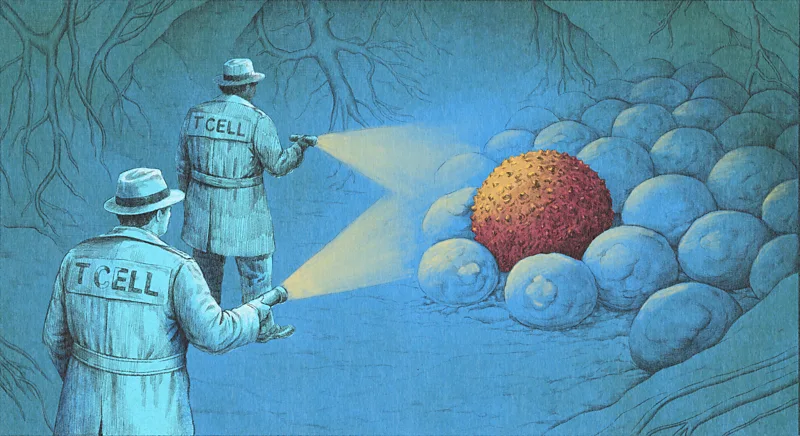
In recent years, breakthroughs in cancer treatment have begun to transform what was once considered a nearly impossible fight into a story of hope and innovation. At the center of this transformation is a rapidly advancing field known as immunotherapy, which harnesses the body’s own immune system to detect and destroy cancer cells. For many patients and doctors, the results have seemed almost unbelievable—so much so that some describe them as “like science fiction.”
Traditionally, cancer treatment has relied on methods such as chemotherapy, radiation therapy, and surgery. While these approaches can be effective, they often come with severe side effects and are not always successful, especially in advanced stages of disease. Immunotherapy, however, represents a fundamentally different strategy. Instead of directly attacking cancer, it empowers the immune system to do the job more precisely and, in some cases, more effectively.
One of the most promising forms of immunotherapy is CAR T-cell therapy. This cutting-edge technique involves extracting a patient’s T-cells—a type of white blood cell—and genetically modifying them in a laboratory so they can better recognize and attack cancer cells. Once these enhanced cells are reintroduced into the patient’s body, they can multiply and hunt down cancer with remarkable efficiency. In certain blood cancers, such as leukemia, CAR T-cell therapy has led to complete remission in patients who had exhausted all other options.
Another breakthrough approach involves drugs known as immune checkpoint inhibitors. These medications work by removing the “brakes” that cancer cells use to hide from the immune system. By blocking specific proteins, such as PD-1 or CTLA-4, these drugs allow immune cells to recognize and attack tumors more effectively. Patients with cancers like melanoma and lung cancer have shown dramatic responses, with some experiencing long-term survival that was previously unimaginable.
What makes these advancements particularly exciting is not just their effectiveness, but their potential to provide lasting results. In some cases, patients treated with immunotherapy remain cancer-free for years, suggesting that the immune system may develop a kind of “memory” that prevents the disease from returning. This has raised hopes that certain cancers could one day be managed as chronic conditions—or even cured entirely.
Despite these successes, immunotherapy is not without challenges. Not all patients respond to treatment, and researchers are still trying to understand why. Factors such as genetic differences, tumor type, and the complexity of the immune system all play a role. Additionally, immunotherapy can sometimes cause serious side effects, as an overactive immune response may attack healthy tissues, leading to inflammation and other complications.
Cost is another significant barrier. Advanced treatments like CAR T-cell therapy can be extremely expensive, making them inaccessible to many patients around the world. Efforts are underway to reduce costs and expand access, but progress remains uneven, particularly in low- and middle-income countries.
Scientists are also exploring new frontiers in immunotherapy, including personalized cancer vaccines and combination treatments that pair immunotherapy with traditional methods. Early studies suggest that combining different approaches may improve outcomes, especially in cancers that have been resistant to treatment.
The rapid pace of innovation has been fueled by advances in fields such as genetics and biotechnology. Researchers are now able to analyze tumors at a molecular level, identifying specific mutations and tailoring treatments to individual patients. This personalized approach is helping to maximize effectiveness while minimizing unnecessary side effects.
Patients who have benefited from immunotherapy often describe their experiences in emotional terms. Many had been told they had little time left, only to see their cancers shrink or disappear after treatment. These stories have captured public imagination and inspired further investment in research.
However, experts caution against viewing immunotherapy as a universal cure. While the results are promising, much work remains to be done. Clinical trials are ongoing, and scientists continue to refine these therapies to make them safer, more effective, and more widely available.
In conclusion, the rise of immunotherapy marks a turning point in the fight against cancer. What once seemed like science fiction is now becoming a reality, offering new hope to millions of patients worldwide. As research continues and technology advances, the dream of eliminating cancer may move closer to becoming an achievable goal.
About the Author