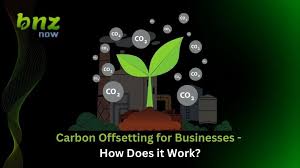
For years, carbon offsetting sat quietly in the background of corporate sustainability. A kind of “optional extra,” mostly used by big companies with big PR budgets. But 2024 and now 2025 brought a shift: small and medium-sized enterprises (SMEs) have jumped into the offsetting world at a surprising speed. And not just eco-brands. Everyone—from boutique retailers to local manufacturers to digital service firms—seems to be buying carbon credits, planting trees, or partnering with offset providers promising to neutralize emissions with a few clicks.
It sounds good. Responsible. Modern. But the question almost every SME is asking right now—some quietly, some out loud—is the same one consumers are asking: Is carbon offsetting actually legit, or is it just the newest form of greenwashing?
Let’s unpack what’s actually happening behind the scenes.
Why SMEs Are Suddenly Investing in Offsetting
There’s pressure from every direction. Customers want brands that act responsibly. Many corporate clients require sustainability data from their suppliers. Even banks and investors are adding environmental metrics to their evaluations. So SMEs, already stretched thin by budgets and time, often see offsetting as the quickest way to show action.
And honestly, it makes sense. You’re running a company, juggling payroll, marketing, suppliers, staff issues. You don’t always have the bandwidth to overhaul your entire operations. Buying a carbon credit has become almost… convenient.
The problem is that convenience and credibility don’t always go well together.
Where Carbon Offsetting Actually Works
Despite the controversy, offsetting can be legitimate when done correctly. Some offset programs genuinely reduce emissions. Some restore ecosystems. Others provide economic benefits for communities that actually need it.
Here are areas where offsets tend to deliver real impact:
1. High-quality reforestation and afforestation
Not the cheap “we planted a seed somewhere” projects. We’re talking long-term, independently monitored programs with survival-rate guarantees. Forests that are protected, maintained, and measured over decades—not months.
2. Methane reduction projects
Especially those involving landfills, agriculture, and waste treatment. Methane is far more potent than CO₂ in the short term, so reducing it creates measurable impact quickly.
3. Renewable energy investments
Wind farms. Solar installations. Community micro-grids in areas that previously relied on diesel. These projects often have traceable, auditable outputs.
4. Verified carbon standards (VCS, Gold Standard, etc.)
These certifications aren’t perfect, but they are better than unverified promises. They force project developers to prove that offsets actually represent real emission reductions.
When SMEs work with high-quality providers, offsetting can complement broader sustainability efforts. Complement, not replace.
And that’s where the greenwashing conversation starts.
Where Offsetting Becomes Greenwashing
Here’s the uncomfortable truth: a lot of carbon offsetting practices—especially the cheapest ones—don’t work. Or they work in theory, but not in practice. Some offsets represent emissions that would have been eliminated anyway. Others rely on forests that die, burn, or never grow to maturity. And some are based on calculations so generous they might as well be fiction.
Greenwashing happens when:
- SMEs use offsets instead of reducing their own emissions
- Credits come from unverifiable or outdated projects
- Claims like “carbon neutral!” or “net-zero business!” have no data behind them
- Companies exaggerate what offsets actually achieve
- Tree-planting projects get counted as “instant carbon removal,” which is… not how trees work
It’s not always intentional dishonesty. Many small businesses simply don’t know what to look for. Offset providers rarely highlight their limitations. And sustainability marketing still leans heavily into shiny, vague labels instead of explanations.
But consumers are catching on, and regulators are too. Which means SMEs need clearer strategies—and more transparency.
The Biggest Red Flag: Using Offsets Instead of Actually Reducing Emissions
Think of offsetting like adding vegetables to your burger. It’s good, sure. But if the whole diet is burgers plus lettuce, the problem hasn’t exactly been solved.
A lot of SMEs make this mistake:
- They still rely on inefficient energy systems
- They haven’t evaluated their supply chain emissions
- Packaging waste piles up
- Logistics operations remain the biggest source of carbon
- Staff commute systems haven’t changed
…yet the branding loudly declares “carbon neutral since 2024!”
This is where offsetting crosses into greenwashing. Because environmentally responsible marketing is not about saying the right thing—it’s about backing it up.
Why Consumers Are Becoming Skeptical
People aren’t naïve anymore. They know that planting one tree doesn’t erase a year of emissions. They know that some companies buy offsets for pennies and then advertise sustainability as if they reinvented eco-innovation.
And across social media—especially TikTok and LinkedIn—there’s a growing wave of environmental educators, independent auditors, and even whistleblowers calling out suspicious offsetting practices.
What was once an easy marketing win can now quickly become a PR risk.
So… Should SMEs Use Carbon Offsetting at All?
Short answer: yes, but carefully. Offsetting isn’t inherently bad. It’s how you use it that determines whether it’s legitimate—or another layer of green paint.
Here’s what makes offsetting credible for SMEs:
1. Reduce First, Offset Second
The hierarchy matters:
- Cut emissions wherever possible
- Switch to greener suppliers or materials
- Improve energy efficiency
- Then offset what you cannot eliminate yet
This is the approach sustainability experts consider legitimate.
2. Choose Quality Over Cheap Credits
Low-cost credits are usually low-quality. If you’re paying $1 for a carbon credit, something’s off. Credible projects cost more because they require monitoring, auditing, community involvement, and long-term maintenance.
3. Make Your Methodology Public
You don’t need a 40-page report. But provide:
- Your emissions estimate
- The offset partner
- The type of project
- The verification standard
- The portion of emissions offset vs. reduced internally
Transparency builds trust faster than slogans.
4. Avoid Vague Claims
Instead of “We’re carbon neutral,” try:
- “We reduced our emissions by 22% this year, and we offset the rest through certified projects.”
- “We’re investing in high-quality methane-reduction credits while working to modernize our supply chain.”
Real, grounded language. It works.
5. Treat Offsetting as a Temporary Bridge
Offsets should help you while you transition—not forever. A good green strategy evolves over time. Customers understand that.
Final Thoughts: Offsetting Isn’t a Scam—But It’s Not a Shortcut
For SMEs, carbon offsetting is neither fully legitimate nor entirely greenwashing. It sits somewhere in the middle, depending on how it’s used. High-quality offsets can make a meaningful difference, especially for small businesses that lack the resources for massive sustainability overhauls. But offsets become greenwashing the moment they’re used as a substitute for real emissions reduction—or when companies rely on vague, feel-good marketing instead of measurable results.
About the Author