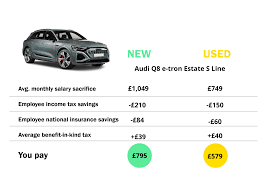
More and more UK workers are discovering that having an electric car doesn’t have to mean paying through the nose. With rising fuel prices and growing interest in cleaner transport, many employers now offer EV salary sacrifice schemes — a route that lets you drive a new or nearly‑new electric vehicle (EV) through your employer, at often significantly lower cost than leasing or buying privately. If you’ve ever wondered “How do I get one of these through work?”, read on. Below’s a detailed, human‑style (and sometimes messy) guide — what the scheme involves, how to ask your employer, what you need to watch out for, and whether it truly makes sense for you.
What is an EV Salary Sacrifice Scheme
In a nutshell: with an EV salary sacrifice scheme your employer leases an electric car and you give up a portion of your gross salary in return for being able to use that car. Because the payment comes from your pre‑tax salary (before income tax and National Insurance), you pay less tax and NI.
The scheme bundles many typical car‑ownership costs — lease, insurance, maintenance, sometimes road tax and breakdown cover — into a single monthly deduction.
Then there’s the tax advantage: for EVs, the so‑called “Benefit in Kind” (BiK) tax rate remains very low. That keeps the extra tax you pay for having a company car minimal — making the deal markedly cheaper than leasing or financing as a private individual.
For many employees, that translates into savings — often between 30% to 60% compared with leasing privately or paying after-tax for a car.
Why Employers Offer It — And What They Get Out of It
If you’re thinking “Why would my boss even bother?”, there are good reasons. For employers, offering EVs through salary sacrifice can be cost‑effective:
- The employer’s National Insurance burden goes down. Since your gross salary is lowered for the sacrificed amount, employer NI contributions shrink accordingly.
- EV salary‑sacrifice can be positioned as a green benefit — useful for companies aiming for ESG (environmental, social, governance) credibility.
- It helps attract/retain staff who want greener transport options or who otherwise couldn’t justify the cost of a new EV.
So it’s often a win‑win: employee gets an EV at a discount, employer reduces payroll costs and boosts “green credentials.”
Steps to Get an EV Salary Sacrifice Scheme Through Your Employer
If you think this might work for you — here’s how to approach it step by step:
- Check whether your employer already offers it
Some companies already have a salary sacrifice scheme in place; others don’t. Ask your HR or benefits team whether there’s an EV or company‑car salary sacrifice offering. - If not, suggest it — with reasons
If the scheme doesn’t exist, you can still raise the idea. Highlight the benefits: lower employer NI contributions, attractiveness for staff, ESG alignment, and the rising demand for EVs among employees. - Understand the deal’s structure
Make sure you get clarity on:
- monthly deduction amount (from gross pay)
- lease duration (often 2–4 years)
- what’s included: lease, insurance, maintenance, tyres, breakdown, sometimes charging infrastructure or road tax
- what happens at end of lease (return, renewal, or exit costs)
- Run the numbers personally
Use a take‑home pay calculator or ask HR to show before‑ and after‑tax comparisons. Because you’re giving up gross pay, tax and NI go down — while you pay a low BiK (for EVs) instead. Many find the net monthly cost far lower than a private lease or loan after tax. - Confirm you remain above minimum wage
By law, salary sacrifice can’t push your gross pay below the National Minimum Wage. So check your post‑sacrifice salary stays above that threshold. - Sign the revised contract/benefit agreement
Because your pay and benefits change, you’ll need a formal agreement. It must clearly state your pre-sacrifice salary, the deduction amount, and what you get in return (the EV, benefits, lease terms). - Use the car — with lower tax, simpler maintenance, fewer surprises
Once set up, your gross salary reduces, tax and NI savings apply, and you get the EV with bundled running costs under one payment.
What to Watch Out For — Potential Downsides or Pitfalls
Salary sacrifice for EVs often looks like a win — but there are caveats and things worth double‑checking:
- Benefit in Kind (BiK) isn’t zero: yes, it’s much lower for EVs, but it still applies. That means some extra tax remains.
- You don’t own the car — you lease it. At the end of the agreement, you don’t keep it (unless the scheme allows a purchase option, which many don’t).
- May affect other benefits: because your “official salary” drops, bonuses, pension contributions, student‑loan repayments, income‑based benefits might be impacted. Especially for higher‑earners, this needs careful thought.
- Early exit rules are often strict: if you change job, get laid off, or want to leave the scheme early — there may be penalties or unexpected costs. Some providers allow “early exit protection,” but it varies.
- Not always cheaper than private lease: though salary sacrifice reduces tax/NI burden, some schemes mark up the lease or maintenance costs higher than a good private deal. It pays to compare total monthly cost versus private options carefully.
- Charges for charging/fuel may still apply: the scheme often covers the car and maintenance — but electricity for charging (home or public) may remain your responsibility.
Who Benefits Most — And Who Should Be Cautious
Likely to benefit:
- Employees on mid-to-high incomes who pay income tax and NI at useful rates (so tax savings matter).
- People needing a new-ish EV but don’t want the hassle of buying, insurance, maintenance, depreciation risk.
- Those who drive regularly: commuting, business travel, long journeys — because the savings on fuel and running costs add up.
- Folks who appreciate “all-inclusive” simplicity — one payment, no surprises.
Might reconsider if:
- You drive very little (so lease costs outweigh fuel/maintenance savings).
- You expect income fluctuations — bonuses, overtime — which might complicate take‑home pay.
- You value owning the car, building equity or reselling it later (salary sacrifice gives you a lease, not ownership).
- You care about future flexibility — early exit charges or restrictive contracts might be a problem.
Why 2025 Might Be a Good Time to Ask for It
Several tax and regulatory factors make 2025–2026 a favourable time for EV salary sacrifice:
- BiK rates for zero-emission cars remain low, making EVs a more tax‑efficient perk than traditional company cars.
- Employers face rising National Insurance costs — offering an EV scheme can reduce their tax burden while adding a desirable perk.
- The scheme simplifies costs: leasing, maintenance, insurance — bundled. For many employers, it reduces administrative overhead versus managing reimbursements or mileage allowances.
- With growing concerns over climate change and corporate ESG commitments, green employee benefits like EV salary sacrifice can strengthen employer branding and staff morale.
Given all that, many companies may be open to introducing or expanding such schemes — so asking now might get you a yes.
A Realistic Example — What You Might Save
Suppose you work for an employer offering an EV salary‑sacrifice scheme. They offer a lease for an EV (fully electric) with all-inclusive package.
- Your gross salary: £40,000
- Lease package deduction: £500/month (i.e. £6,000/year) from gross pay
- Taxable income drops, so you pay less income tax & NI
- EV BiK rate (2025/26) remains low — meaning modest extra tax
- Compared with a private lease (paid post‑tax), you may save 30–50% overall — including lower running costs for “fuel” (electricity vs petrol), no deposit, no deposit lost, and maintenance/insurance included.
For many, that’s not just a perk — it’s a genuine financial advantage.
Final Thoughts
Getting an EV through your work’s salary sacrifice scheme can be a smart, cost‑effective way to switch to electric — especially right now in 2025, when tax rules and charging economics favour zero-emission cars. But it’s not a free lunch. You give up part of your gross salary, trade ownership for leasing, and commit to a multi‑year contract.