Portable EV chargers have quietly slipped into the UK electric-vehicle conversation over the last couple of years. Not as a headline product like home wallboxes or ultra-rapid motorway hubs, but as something more subtle. A backup tool. A just-in-case accessory. The kind of thing drivers think about only after that one uneasy moment — the battery dropping too low, the next charger further than expected, the sat-nav rerouting suddenly because of traffic. And with EV adoption growing fast across the country, more drivers are starting to ask the same question: is it finally time to buy a portable charger?
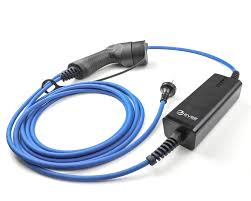
On paper, portable EV chargers look simple enough. A cable. A small control unit. A plug that fits into a standard domestic socket or a reinforced outdoor power point. But their appeal has grown mainly because they offer something many EV owners crave — freedom from charger anxiety. Not range anxiety as such, but the stress of unreliable public charging. If you’ve pulled into an out-of-service charger on a cold night once or twice, you probably understand the feeling. Having your own backup charger in the boot sounds reassuring. It sounds like control.
But the reality is a bit more complicated. Portable chargers aren’t magic devices that pump your battery full of energy instantly. They’re slow. Really slow in many cases. Many of the basic ones draw around 2.3kW from a normal UK three-pin socket, which means you might gain something like 6 to 8 miles of range per hour. It’s not enough for quick journeys or emergency situations unless you have several hours to spare or a safe place to wait. And that’s one of the biggest misconceptions. People imagine portable chargers as emergency tools that work like a petrol can for electric cars. They don’t. If you’re stranded with only a few miles left, plugging into a household socket at someone’s home or a campsite might save you — but it’s not the fast rescue many expect.
Still, portable chargers do have legitimate advantages. For drivers who travel to remote areas, stay in holiday cottages, or visit locations where no dedicated EV charger is available, they can be a reliable fallback. For people living in rented accommodation where installing a home wallbox isn’t possible, a portable charger might actually be their everyday solution. It’s not ideal, but it works. Slowly, but it works. And some newer portable chargers come with adjustable amp settings, built-in safety features, weather protection, even companion apps that show real-time charging stats.
Then there’s the cost factor. Home chargers in the UK cost anywhere from £700 to £1,200 installed. Ultra-rapid public charging is the most expensive way to fuel an EV. A portable charger, meanwhile, might cost between £150 and £400 depending on the brand and features. That price difference creates a tempting argument. Why spend over a thousand pounds on a wallbox when a portable unit technically fills the same role? But again, the trade-offs are significant. A wallbox charges far faster — often 7kW at home, which is roughly three times quicker than a portable three-pin charger. Wallboxes are also safer for long sessions because domestic sockets weren’t designed for hours of continuous high-load current.
In fact, fire safety experts make it clear: occasional portable charging is fine, but regular daily charging through a three-pin socket should be avoided, especially on older wiring. People sometimes forget that electricity infrastructure ages. A socket in a 1970s home might have been built for lamps, kettles, maybe a TV. Not hours of continuous EV charging overnight. That’s one of the reasons manufacturers emphasise that portable chargers are meant as temporary or backup solutions, not primary tools.
Another angle people don’t consider much is portability itself. These chargers are “portable” in the sense that you can carry them and use them anywhere, but they’re not light. The cable alone can be heavy. The control box adds bulk. And when it rains — as it tends to in the UK — things get messy. Some units are weather-proof, some aren’t. Some are fine lying on gravel or tarmac, others aren’t. A few models allow you to swap plug types for travelling abroad, which is useful, but again, you don’t get the simplicity or speed of public rapid charging.
Even so, there’s a growing group of UK drivers who swear by portable chargers. Road trippers. Rural residents. Caravan and camping families. People who visit older properties. Electric company car users who don’t want to rely on workplace chargers alone. For them, a portable charger isn’t about speed or efficiency — it’s about peace of mind. The knowledge that as long as they find a working socket somewhere, they’ll get home eventually.
On the other side, some drivers dismiss portable chargers as unnecessary or outdated. They argue that UK charging infrastructure has improved enough that you rarely, if ever, need a portable device. With more rapid chargers being added each month and new ultra-rapid hubs opening in major travel corridors, the argument goes that carrying a slow cable around for emergencies isn’t worth the effort. And there’s some truth in that. The network is expanding. Reliability is getting better. Apps provide live availability and route planning.
But the UK isn’t uniform. There are parts of Scotland, Wales, the Midlands and even pockets of the South West where public charging still feels patchy. And while the infrastructure is expanding, demand is rising even faster. At peak travel times, you see queues. You see busy hubs. And you see the occasional driver eyeing their battery percentage a little more nervously than they’d like to admit.
Are portable chargers worth it? The honest answer is that it depends entirely on how you drive. If you rarely leave town, have a reliable home charger and don’t travel to rural areas, then a portable charger probably won’t change your life. If you frequently find yourself far from public charging or rely on unpredictable charging locations, then yes — a portable charger can be a surprisingly useful tool. Not fast. Not glamorous. But dependable in its own limited way.
They’re not a replacement for proper home charging. They’re not a substitute for rapid chargers. They’re more like a safety net. Something you hope you never need but feel better having. And maybe that’s the real point. In a world where EVs represent the future but infrastructure still feels like work-in-progress, a backup option offers comfort. Even if it takes a few hours to give you enough charge to get moving again.
Final Thoughts
Portable EV chargers aren’t for everyone, and they were never meant to be. They fill a small but important gap in the UK market — offering peace of mind for drivers who travel to remote areas, those without access to home charging and anyone who wants a backup plan in case public chargers fail. They won’t charge your car quickly, and they shouldn’t be your main charging method. But they can save a journey, prevent a breakdown and make EV ownership feel just a little less unpredictable. For many drivers, that’s enough reason to keep one in the boot.
About the Author